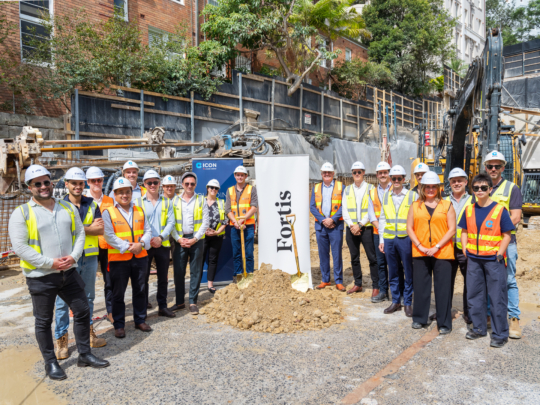
Behind every Fortis development is a team of builders, consultants, contractors and project specialists working towards a shared outcome. While every project is different, successful delivery often comes down to the same fundamentals: strong relationships, clear communication and alignment long before construction commences.
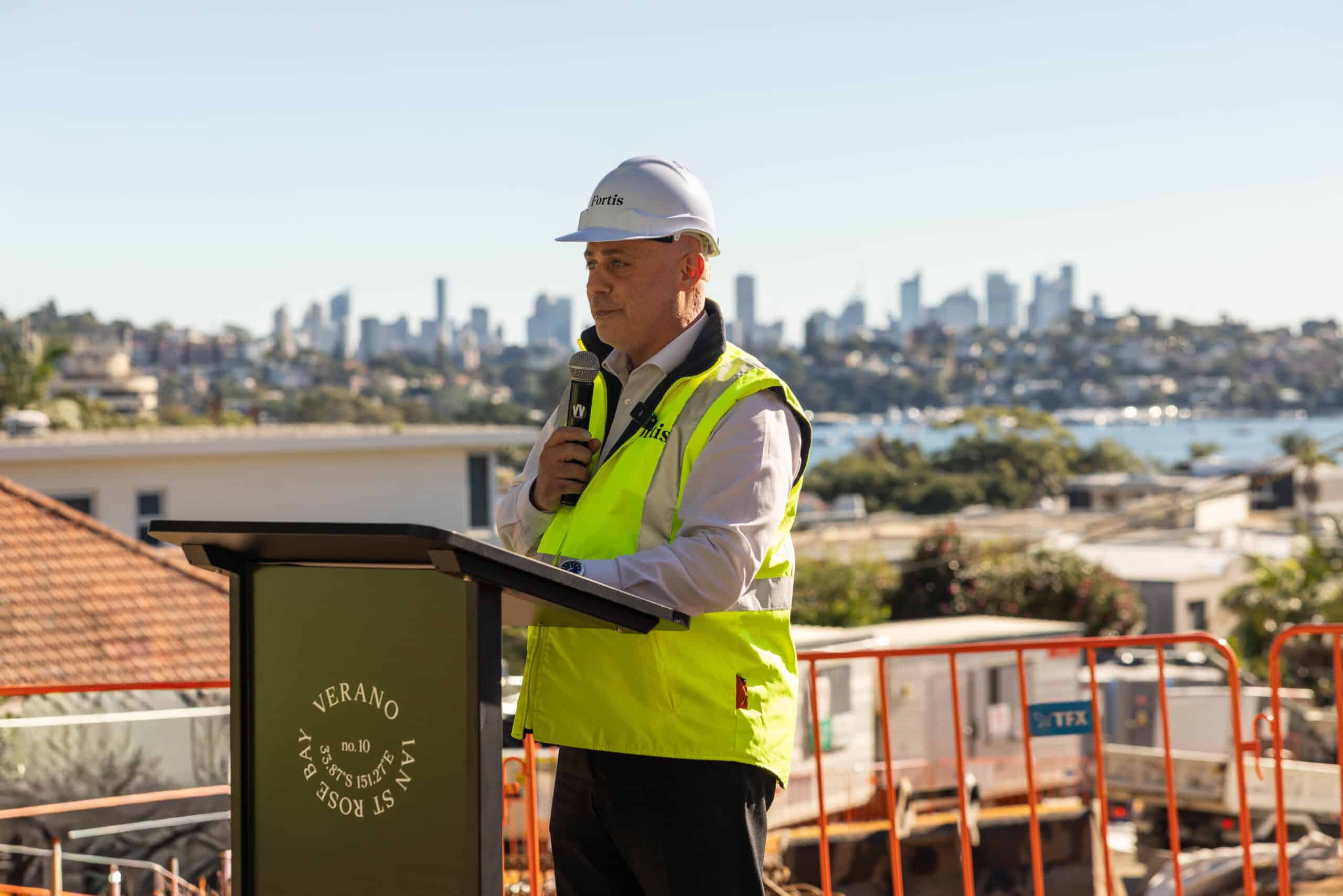
We sat down with Head of Delivery, Stephen Boulos, to discuss how Fortis selects the right construction partner, the lessons he’s learned throughout his career, and the factors that contribute to successful project outcomes.
How important is selecting the right construction partner for a project? What do you look for?
Selecting the right construction partner is one of the most important decisions you make on a project. Design, planning and approvals all play a critical role, but ultimately a project is only as good as its execution.
For me, it starts with experience. You want a builder that has successfully delivered projects of a similar scale and complexity, and understands the challenges that may arise along the way. Beyond that, I look for alignment in how teams work. The most successful projects are built on collaboration, transparency and a shared commitment to achieving the best outcome, rather than simply meeting contractual obligations.
Commercial discipline is equally important. A strong construction partner needs to demonstrate robust program management, quality control, risk management and financial stability. When those fundamentals are in place, the project team can focus on solving problems early and maintaining momentum throughout delivery.
How early do you involve a construction partner, and does the process differ between residential and commercial projects?
My preference is always to engage a construction partner as early as possible. One of the biggest advantages of early involvement is gaining real-world delivery input while the design is still evolving. Builders can provide valuable feedback around buildability, procurement, program, staging and cost planning before key decisions are locked in.
The process itself is relatively consistent across residential and commercial developments. We define the project objectives, identify suitable partners, assess capability and cultural fit, and then engage them throughout design development and planning.
Commercial projects often involve more complex services, staging and stakeholder requirements, so the level of early engagement can be more extensive. That said, the principle remains the same. The earlier the delivery team is involved, the better positioned the project is to manage risk and make informed decisions.
At what stage of a project are the most important decisions made?
The most significant decisions are almost always made early. The planning and design phases establish the framework for everything that follows, from project scope and procurement strategy through to program, budget and risk allocation. Decisions made during this period have a disproportionate impact on the outcome of the project.
What I’ve learned throughout my career is that relatively small decisions made early can have substantial implications later. The earlier a team identifies opportunities, constraints and risks, the greater its ability to influence the result.
By the time construction starts, many of the project’s biggest decisions have already been made.
What are some of the most valuable lessons you’ve learned throughout your career?
The biggest lesson is that people deliver projects, not contracts. Strong relationships consistently lead to better outcomes. When teams trust each other and communicate openly, issues are identified earlier and resolved more effectively.
I’ve also learned the importance of planning. Time spent aligning stakeholders, understanding risks and establishing clear objectives at the beginning of a project almost always saves time later. While every project encounters challenges, the best teams don’t spend their energy assigning blame. They focus on solving problems and maintaining momentum.
Another lesson is that risk works best when it is actively managed rather than simply transferred. Successful projects are built on collaboration, and that means all parties taking responsibility for identifying and mitigating issues before they become larger challenges.
At the end of the day, what does a successful partnership look like? What leads to seamless project delivery?
A successful partnership is one where everyone is working towards the same outcome. The strongest project teams are aligned from the outset, communicate openly and understand each other’s responsibilities. There is trust, accountability and a willingness to work through challenges together.
Seamless delivery is usually the result of several factors coming together: clear objectives, strong planning, effective governance and early stakeholder alignment. When those foundations are established, teams can focus less on managing process and more on delivering outcomes.
Ultimately, success isn’t just measured by program, cost or quality. It’s also reflected in the strength of the relationships built throughout the process and whether all parties feel they have contributed to a successful outcome.